Liquid Time Capsules: Why Kochi Sake Outlasts Your Burgundy Cellar
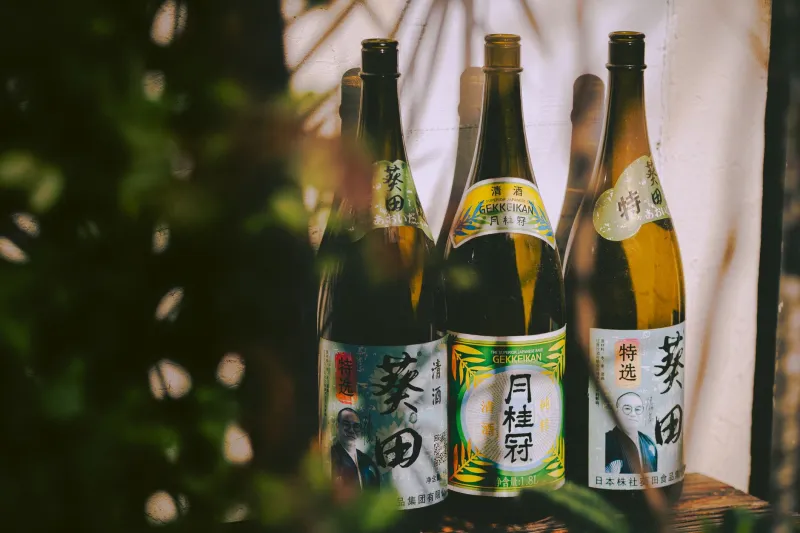
There's a moment that happens to a lot of American collectors — the moment they crack open a bottle of aged Kochi sake and realize they've been sleeping on the most interesting cellaring opportunity in the drinks world. Wine has held the throne for so long that the idea of aging sake feels almost counterintuitive. Most Americans still picture sake as something you drink warm at a sushi counter, not something you tuck away for fifteen years and open on a special occasion. Kochi is in the business of changing that picture entirely.
So what actually happens inside a Kochi sake bottle over time? And why does this particular prefecture produce bottles that age with more grace and complexity than many wines three times the price? The answer lives in the water, the yeast, and a climate that does something genuinely unusual to fermented rice.
The Water That Builds the Foundation
Kochi sits on the southern coast of Shikoku island, wrapped in mountains and fed by some of the most mineral-rich river systems in Japan. The Niyodo River — often called the clearest river in Japan — isn't just a pretty backdrop. It's a geological filter that strips water down to an almost crystalline purity while retaining a specific mineral profile that brewers have been exploiting for generations.
High-mineral water does something interesting to sake during fermentation: it accelerates yeast activity and produces a more structured, drier final product. That dryness isn't just a flavor preference. It's a preservation mechanism. Lower residual sugar means fewer reactive compounds available to oxidize and break down over time. In practical terms, a dry Kochi junmai aged for five years doesn't taste tired — it tastes focused, like the noise has been stripped away and only the essential character remains.
Compare that to the mineral profile of, say, Burgundy's limestone-heavy soils, which contribute to the wine's aging backbone. Both are expressions of geology in a glass. The difference is that Kochi's water profile creates a foundation that's inherently more stable under long-term storage conditions.
Yeast That Keeps Evolving
Kochi's brewing culture has always been a little renegade. Local breweries developed their own proprietary yeast strains over decades — strains that weren't selected for the mild, crowd-pleasing profiles that dominate other regions. Kochi yeasts tend to run expressive and acidic, producing sake with higher natural acidity than most Japanese prefectures.
That acidity is the second piece of the aging puzzle. Acid acts as a natural stabilizer, slowing microbial degradation and protecting the sake's aromatic compounds. It's the same reason high-acid white wines like Riesling and Chablis age better than low-acid, fruit-forward styles. Kochi sake essentially has that high-acid architecture built in by default.
Over time, the acidity softens slightly while the umami compounds — glutamates and amino acids produced during fermentation — concentrate and deepen. The result is a transformation that wine collectors would recognize immediately: a young, aggressive product that mellows into something layered and contemplative.
Humidity, Cellars, and the Kochi Climate Advantage
Kochi receives more rainfall than almost any other prefecture in Japan. That sounds like a logistical headache, but it creates something valuable: naturally stable humidity levels that make cellar storage more forgiving. Bottles stored in Kochi's traditional kura (brewery storage facilities) benefit from consistent moisture that prevents cork-equivalent seal degradation over time.
For American collectors importing Kochi sake, this means the bottles arrive already acclimated to careful storage. A cool, dark environment — 55°F, low light, minimal vibration — is all you need to continue what the climate already started.
Tasting Across Time: A Side-by-Side Breakdown
Here's where the theory becomes real. Imagine sitting down with three expressions of the same Kochi junmai daiginjo — one at five years, one at ten, one at fifteen.
The 5-Year: This is where you still feel the brewer's hand clearly. The sake is dry and precise, with green apple and white pear up front, undercut by a saline minerality that recalls fresh oysters. The finish is clean and slightly austere — not cold, but structured. This is the Burgundy equivalent of a village-level Chablis at its drinking window.
The 10-Year: The fruit has shifted. Green apple has given way to dried apricot and a faint nuttiness — think roasted rice, toasted almonds, a whisper of caramel without the sweetness. The acidity is still present but integrated now, acting as a spine rather than a statement. This is the bottle that converts skeptics. It's unmistakably sake, but it's drinking with the complexity of a well-aged Meursault.
The 15-Year: This is the revelation. The color has deepened to a pale amber. The nose is haunting — dried mushroom, aged wood, dark honey, and something almost sherry-like without any of the oxidative damage you'd expect from a wine this old. On the palate, it's rich and round, with an umami depth that coats the tongue and lingers for minutes. The finish is extraordinary: long, warming, and complex in a way that defies the simplicity of its ingredients.
No Burgundy at this price point — and aged Kochi sake remains dramatically underpriced relative to comparable aged wine — is doing anything more interesting.
The Collector's Opportunity Nobody Is Talking About
Here's the honest truth: the American market hasn't caught up yet. Aged Kochi sake is still flying under the radar, which means the window for building a serious cellar at accessible prices is open right now, but it won't stay that way forever. A few high-profile restaurant placements and one or two influential critics are all it would take to change the conversation entirely.
If you're already cellaring wine, the practical adjustments are minimal. Sake doesn't need the same temperature precision as Burgundy — a consistent cool environment is sufficient. The bottles are generally sealed more reliably than natural cork, reducing the risk of spoilage from bad seals. And the diversity of aging trajectories across Kochi's different styles — junmai, junmai ginjo, junmai daiginjo, aged nigori — gives a collector real range to work with.
The Burgundy comparison isn't meant to diminish wine. It's meant to expand the frame. Serious aging isn't a wine-exclusive pursuit. It never was. Kochi has been proving that for generations — Americans are just now getting the memo.